
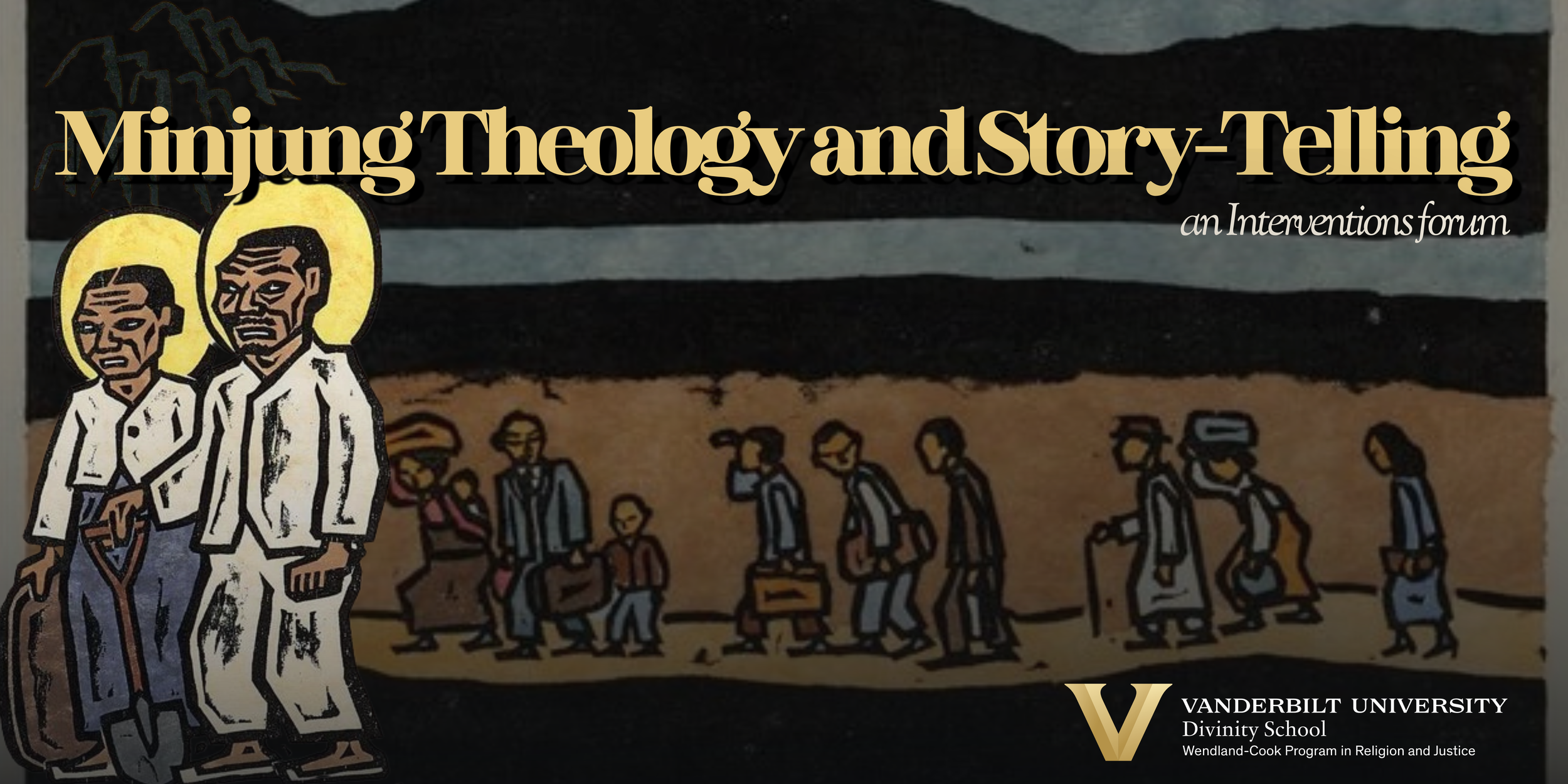
Minjung Theology
Inspired by other liberation movements around the globe, minjung theology is one of the original liberation theologies which grew out of people’s movements in Korea during the 1970s. Similar to all genuine liberation efforts, it faced substantial pushback and has often been declared dead. Nevertheless, minjung theology could never be completely silenced and some of its work continues.
Today, as struggles for liberation only gain traction, many of the topics explored by minjung theology are more relevant than ever. As the few at the top consolidate their rule over the many, the many are developing new awareness, strategies for resistance, and are building alternatives. These developments have profound implications for the future of theology and faith communities with the potential to liberate not only the people but also theology and religion itself. That such liberation is necessary is becoming increasingly clear in the present moment, as theology and religion are once again used to support empire rather than the people.
We are grateful to Professor Jin-Kwan Kwon, one of the foremost authorities on Korean minjung theology, for being in dialogue with us and for engaging some of the fundamental concerns of the Wendland-Cook Program that include international and intersectional solidarity as well as interdisciplinary and interreligious work. While the latter topic is implicit rather than explicit here, the minjung always transcends individual religious identities. This contribution and the subsequent engagement with two Ph.D. students in the Graduate Department of Religion at Vanderbilt concludes the three semesters that Professor Kwon spent as a visiting academic fellow of the Wendland-Cook Program in Religion and Justice at Vanderbilt Divinity School.
Joerg Rieger, Distinguished Professor of Theology, Director, Wendland-Cook Program in Religion and Justice
Contributors: Jin Kwan Kwon; Taeha An; Daniel Cho; Jin Kwan Kwon
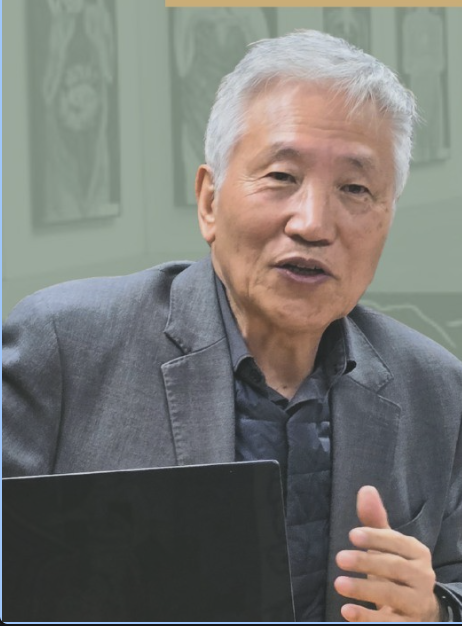
Minjung and Story Telling
Jin Kwan Kwon
June 16, 2026
Minjung theology (MT) may have had an impressive impact on both those working with minjung and on intellectuals, due to its central tenet that minjung are the subjects of history. Since the latter part of the nineteenth century, Korea was under attack from Western and Japanese imperial forces. Minjung theologians and intellectuals observed that it was not political rulers but the minjung, the politically oppressed, who engaged in struggles for independence and directed the course of Korean history. Minjung theologians and intellectuals affirm the minjung remain engaged in struggles for independence still today.
However, factory workers and other urban poor have raised their doubts to minjung theologians and intellectuals asking, “Is it valid that we, uneducated, poor have-nots, can become the subjects of history, even though we are held captive by backwardness and poverty?”
We may claim minjung theology was the outcome of remorse and repentance among the intellectuals, who enjoyed their privileges as professors, ministers, and students, with great promise of promotion and prosperity. They repented and met with young factory workers.
Faced with questions of legitimacy from the impoverished, minjung theologians had to identify elements that would explain how the minjung become subjects of history. They grappled with which sources and elements contributed to increasing the minjung’s potentiality and subjectivity.
In the beginning, to answer the question posed by the minjung, theologians turned to han. Han is a Korean term that expresses an accumulated feeling of sorrow, injustice, helplessness, anger, and related emotions, created by long-standing injustice inflicted upon oppressed people. Minjung theologians claimed han generates immense energy capable of overthrowing the oppressors at a critical moment. When such energy is harnessed as creative power through dan (cutting off the evil cycle of vengeful reprisals), it changes the historical trajectory. This was one of the earliest explanations by first-generation minjung theologians. History tells us that such han-originated revolutionary power can be manipulated by evil minds and result in unbridled power and chaos. Han-originated and han-ridden revolution can become brutal, perpetuating evil cycles of reprisals.
Han is no longer a dominant sentiment among the Korean minjung. South Korea is no longer a wild, dictatorial, military country that oppresses and inflicts violence on the people. Therefore, we need to seek a more relevant explanation of the minjung’s subjectivity and potential. My suggestion about the subjectivity and potentiality of minjung has two elements: objective and subjective.
The Objective Element
The social and structural contradictions the minjung are caught in, can become a source of creative power that can resolve the current system. The space the minjung occupy becomes a hole within the system and destabilizes it. The system tries to amend it, but the system, as it is, is incapable of filling and fixing the hole. The minjung will return again and again, taking up more space each time. The hole, crack, and gap within the system can become the space where a struggle for a new, alternative reality is staged and subjects of the struggle are created.
There are many holes in the system wherever contradictions and injustices exist, such as the issues of migrant workers, environmental destruction, and gender inequality. These holes share a commonality as they are all outside the dominant system that is controlled by the capitalist oligarchy. This location in the system is an objective aspect of minjung’s subjectivity.
The Subjective Element
Let us now turn to a subjective element of the minjung’s subjectivity and potentiality. We can imagine the minjung’s first subjective action taking place at the crux of social and structural contradictions. This action includes their groans, cries, and also their struggles. There are always contradictions, but without the minjung’s cries and struggles, it cannot become a crux that destabilizes the whole. We can designate this as the subjectivity of the masses. It is a slave mentality and subjectivity.
Stories of the Minjung
The first move from the minjung, from the space of the hole, is a cry of agony. Simple groans, cries, and shouts, however, are not heard because they disappear into the air. To ensure others hear them, read them, and join in their cries, they must become stories, narratives, and reports. As the minjung take the stage of society and history, they express their agonies and contradictions in stories, paintings, and songs. That is why minjung arts, stories, novels, and movies proliferated during the minjung movement. Stories are the most accessible means of communication that minjung can employ to communicate their aspirations and their agonies. The late minjung theologian Suh Nam-Dong claimed the story is the language of the body and of God, and therefore revelatory.
I interpret Suh Nam-Dong’s idea of story differently. Rather than being the language of the body, I connect the story to the concept of symptom. A symptom is an event of the body. For the minjung, symptoms are often expressed and felt as bodily suffering, pain, and trauma. These symptoms, expressed through story, reveal the contradictions the minjung are suffering from.
Thus, Suh Nam-Dong’s suggestion that story is the language of the body, as opposed to the language of the head, which facilitates and promotes the dominant system, is understandable. Thus, we may say that the story, as the language of the body, is the language of the symptom that destabilizes the system. Story can provide the motivation to break the dominant system. The task of interpreting the story is to disclose the symptoms and utopian longings of the people.
Good stories are sources and treasures of the minjung’s subjectivity. Stories reveal the truth and foster readers’ sympathy and solidarity. Still, there are living stories that are told by the minjung themselves to cope with their realities. Story is the language of the common minjung, who live by their bodies and labor. Thus, stories are always abundant in the lives of the common people.
Living Stories
What is the role of living stories? A living story is created and told by people who have experienced events and happenings in their lives, whether negative or positive. Negative experiences are those of pain and suffering, and positive ones are successes and resolutions of contradictions and problems. Living stories are the product of the dialectical relation between the subject and the object, or the minjung and the situation. Minjung’s stories change and develop into fuller ones as the situation and people’s understanding of it change and develop. Living stories are in the process of becoming more complete and fuller ones. Stories represent the subjectivity, which refers to the state of having a self-consciousness, of the minjung engaging with contradictions in the situation. A story is not full knowledge of the situation, but it contains some knowledge. Telling a story is a function of the subject and reflects an understanding of the situation.
In conclusion, a story represents the self-consciousness of the people. A story leads people to be conscious of themselves, their relations with other subjects and other classes, and their understanding of the system they are in. Therefore, the people’s story is the base and ground for the minjung, on which theological reflections are based.
Jin Kwan Kwon is a retired professor of the Anglican University in Seoul, South Korea. His major research interests are Constructive Theology and Minjung Theology.
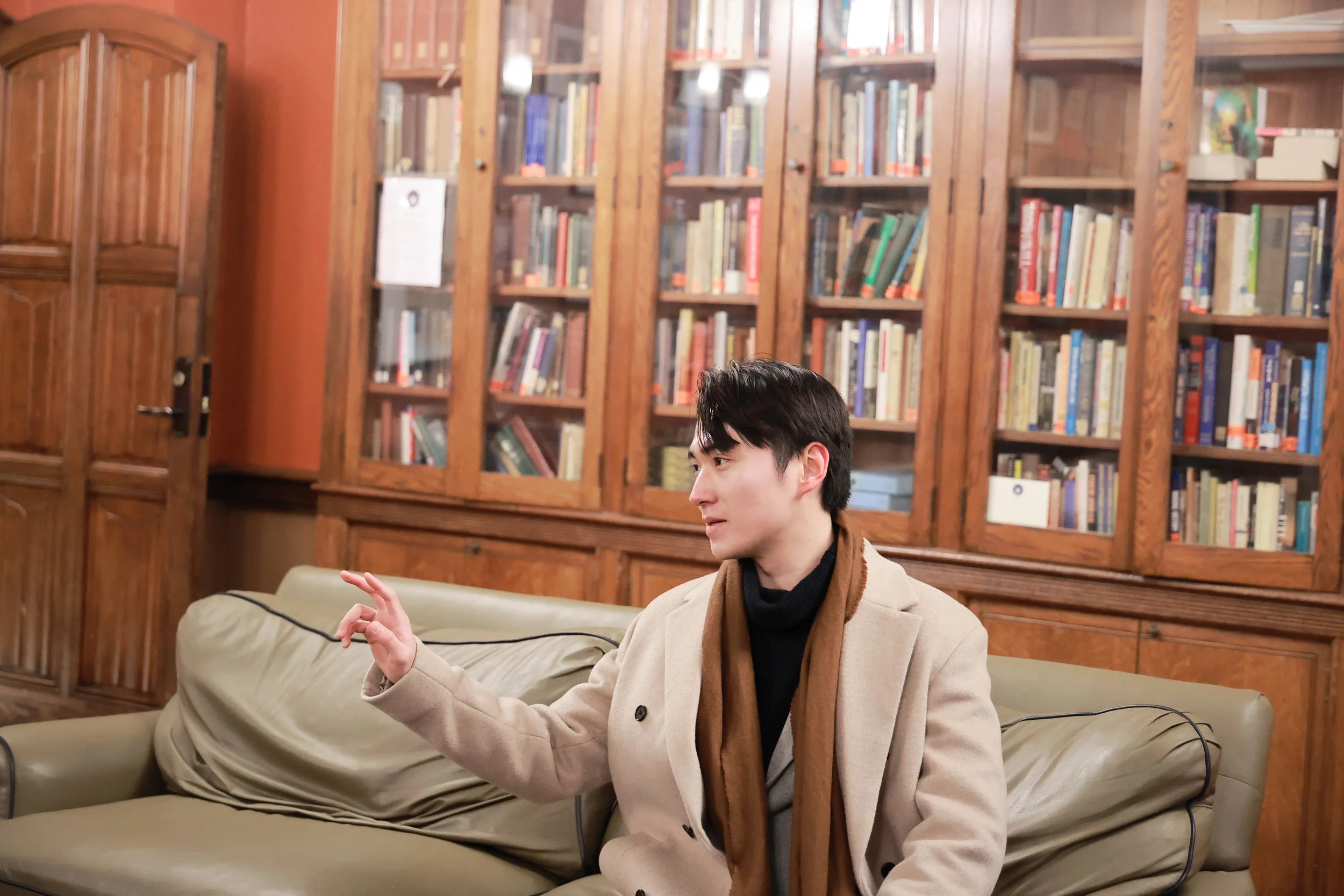
A Response to “Story in Minjung Theology”
Taeha An
June 22, 2026
In “Story in Minjung Theology,” Jin-Kwan Kwon carefully reflects on the core tenets of minjung theology as a theological reflection grounded in the life stories of common people and in history, while drawing our attention to its distinctive approach to “story (or stories)” as a fundamental source of theological imagination. He does not limit himself to discussing minjung theology as a mere “strand of thought” or historical phenomenon but rather challenges us to bring this tradition into dialogue with the ongoing injustice, sorrow, and helplessness of our time (such as ecological crisis and gender inequality) and to listen to our neighbors’ cry of agony. I want to elaborate on the challenge he presents and push it forward for further discussion.
First of all, Kwon illustratively reminds us to be aware of the socio-economic context that necessitated the birth of minjung theology. It was a historically sensitive response to rapid industrialization and the despotic authoritarian rule of the state. Within the structural challenges of social “progress,” theologians encountered low-wage laborers living in slums and politically oppressed individuals. In response to these self-negating and alienating forces, minjung theologians discovered the transformative power of han, contradictions within ideological structures of governance, and the people’s consciousness of themselves as the subject of history. To proceed further in this discussion, I wonder whether we can conceive of minjung (not minjung theology but the very concept of minjung itself) as a theologically relevant category. This question arises not simply because there are conceptually competing terms (such as inmin or daejung, which Kwon mentions, but also minjok, saram(deul), gukmin/simin), but because the site of oppression and alienation seems to look different from the time of minjung theology’s birth and development. In neoliberal capitalist Korea and some other places, is it not the loneliness of individuals that requires a more urgent theological response when the country shows a high rate of voluntary death? From another perspective, coming from a more practical angle, can we (or should we still) maintain a positive appraisal of the mass and the people in the age of extreme individuality and solitude, ironically engendered by the hypervisibility of social media and hyper-communication of information on YouTube, Instagram, and TikTok? From a Hegelian perspective, can the moment of minjung be interpreted as having been transitory, as it has already entered the moment of sublation (Aufhebung)? Would minjung remain until the coming of the Kingdom of Heaven, or should it be transformed into something else as it participates in the preparation for the Kingdom?
Minjung as the subjects of history is indeed a comforting account of the power of the oppressed, and it certainly grounds the way we could imagine the transformative power of solidarity and collective struggle. However, I also see the danger of hyper-romanticization of minjung. I do not mean this in a condescending way or as an attempt to discourage the minjung movement as a whole; rather I bring this question to investigate what legitimates the claims to righteousness and justice of minjung. Is minjung righteous and just in itself? Elitism or oligarchic democracy is not the alternative I would favor, but have we not seen minjung movements bring about more structurally fundamental systems of oppression and alienation (my careful historical example would be Iran after the Islamic Revolution against the Shah, Mohammad Reza Pahlavi)? True, it was the Roman state authority that criminalized and executed Jesus, but was it not also the misrecognition, silence, and mockery of the ochlos toward Jesus that led him to the cross? I wonder whether minjung theology requires a Hegelian negation to become minjung for-itself and finally minjung in-and-for-itself. The negative connotation attached to the word “ochlocracy” in English appears unfair to me as well, but I also wonder, what would be minjung theology’s defense of ochlocracy or ochlocratic democracy?
Minjung theology was undeniably a response to the country’s poverty. Korea and its minjung theologians were aware of the economic conditions in which they lived. However, the economic situation looks very different in Korea of my generation. Korea is undeniably a globally leading economy. Of course, this should not conceal the fact that poverty still exists, but it has been pushed to the margins, to the corners of Seoul, outside Seoul, and even to other countries. How would minjung theology address poverty in Korea today? Being poor in a poor country and being poor in a rich country are two existentially different phenomena. The former was well articulated by earlier minjung theologians, and I wonder how the latter would be engaged by minjung theologians now facing a new context.
Related to this point, I also wonder how minjung theology would address work and labor. Kown mentions that minjung thought or minjung ideology is different from Marxism, yet it had a Marxist “flavor.” I believe minjung theologians like Kim Yong Bock and Ahn Byung Mu had reservations toward the Marxist thought due to their personal experiences of Communist violence in the North. The threat of Communism from the North still remains an irreconciled scar, as Kwon mentions. However, inter-Korea dynamics have shifted from the time of the Cold War to our time, so I believe a Marxist approach to work and labor would be (although not fully) more acceptable today. Minjung theology has engaged, and still engages, intersectionally with liberation struggles across different identities such as gender, sexuality, and transnational mobilities. How would minjung theology address and respond to the alienation of labor within the capitalist dynamics of productivity and utility in Korea and in global economies?
Finally, I want to put minjung theology in conversation with Christian doctrines. I do not do this to reduce minjung theology to the realm of doctrines nor to bring it into line with “orthodoxy” (whatever that may mean). Rather, I do this to help clarify why minjung theology emerged from Christian theology and why it matters to Christian social and political thought, which is not the monopoly of Korean minjung. My question would be Christological, since minjung theology emphasizes the earthly ministry of Jesus teaching and eating with the masses. What does minjung theology endorse or deny in the doctrinal account of munus triplex regarding Jesus’ threefold office of prophet, priest, and king? Does minjung theology favor one over the other? Or does minjung theology creatively reinterpret Jesus’ offices from the perspective of minjung’s story or social biography?
Just as Kwon’s paper prompts us with more theological challenges and philosophical questions, I believe the “spirit power” of minjung theology, as long as it remains sensitive to the living sites of oppression and violence, can remain vibrant and dwell not only within us but across peoples and nations, among other minjung(s) around the globe. The questions posed by minjung theology surely have enduring significance in our time, although its answers may no longer satisfy us.
Taeha An is a PhD student in the Graduate Department of Religion at Vanderbilt University. His academic work centers on theological and philosophical anthropology, discourses on progress and secularization, and postcolonial ethics and politics.
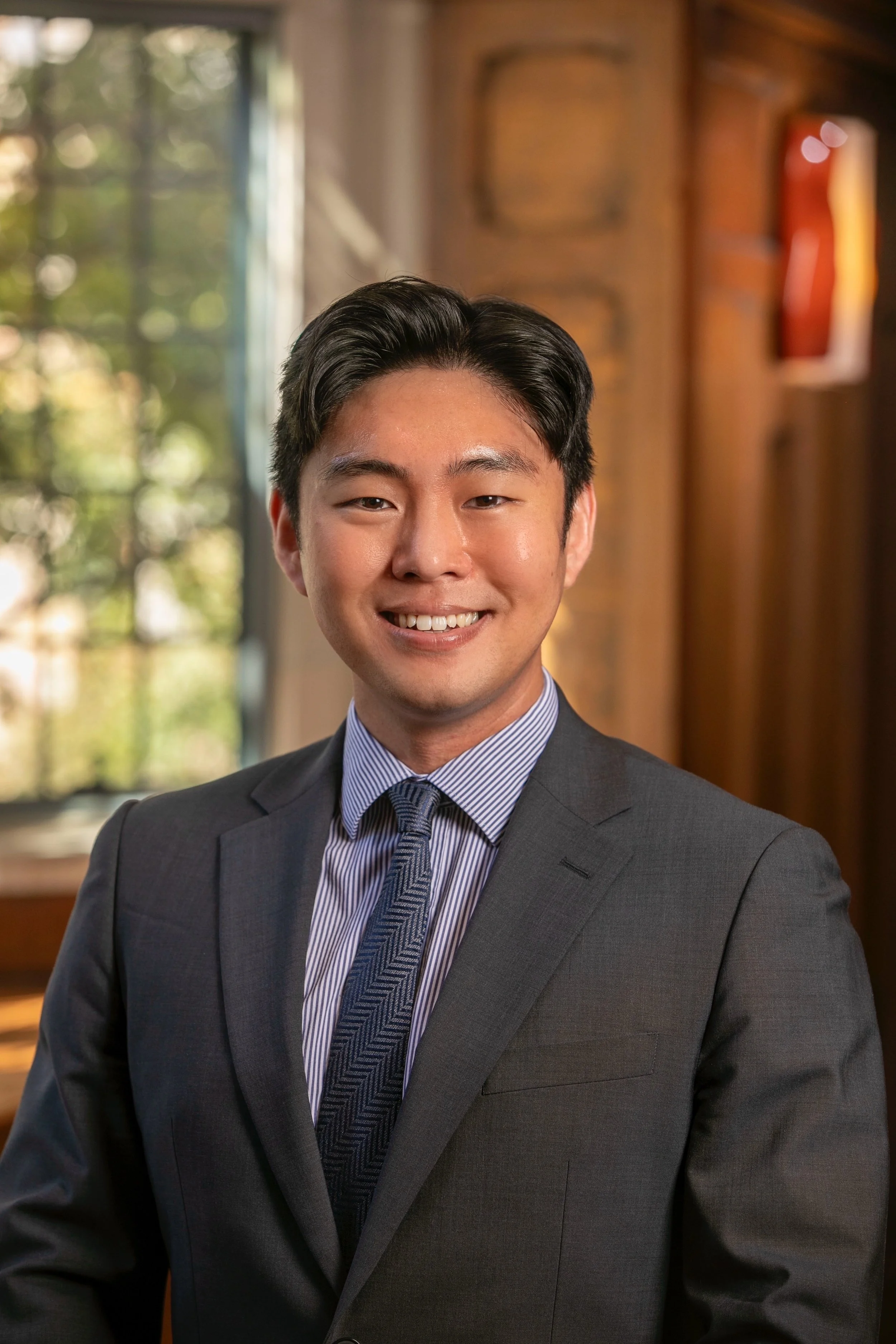
A Response to Jin Kwan Kwon
Daniel Cho
June 29. 2026
What I find especially compelling in your paper is that you do not simply repeat one of the most familiar claims of minjung theology, namely, that minjung are the subjects of history. Instead, you ask a more difficult and more constructive question: how does such subjectivity become possible? What are the actual sources and elements that enable minjung to emerge as historical subjects? That, to me, is the major strength of your paper. It revisits a foundational claim of minjung theology, but it does so critically and creatively. In particular, I appreciate your argument that earlier explanations centered on han are no longer sufficient on their own. You acknowledge the importance of han in first-generation minjung theology, especially as a way of naming the accumulated sorrow, injustice, anger, helplessness, and wounded memory of oppressed people. At the same time, you argue that we now need a more updated and relevant account of minjung subjectivity.
Your proposal, as I understand it, has two parts. First, you identify an objective element. Minjung stand at the site of contradiction within the larger social order. They occupy the cracks, holes, and gaps that reveal the system’s instability. Their location is not simply marginal in a descriptive sense. Rather, it is precisely where the contradictions of the system become exposed. In that sense, minjung are not only those who suffer under the system. They are also those whose very existence reveals the truth of the system. Second, you identify a subjective element. Contradiction alone does not yet produce subjectivity. Minjung become subjects when groans, cries, and suffering take communicable form as stories, narratives, reports, paintings, songs, and social biography. This is a very important move in your paper. The story is not merely illustrative. It is not secondary to struggle. Story is one of the very means by which suffering becomes socially audible, historically visible, and open to solidarity. I think that is one of the most significant contributions of your presentation. You give us a way of thinking about story not simply as expression, but as mediation. Story mediates between suffering and solidarity, between contradiction and consciousness, between agony and historical action.
I was also struck by your engagement with Suh Nam-Dong and Kim Yong-Bock, especially the distinction between the language of the body and the language of the head, and the broader category of the social biography of the minjung. Your interpretation of the story as carrying a symptom is especially suggestive. If I heard you correctly, the story of minjung is not simply a record of experience. It bears within it the symptom of a wounded social order. It carries pain, contradiction, trauma, and longing in ways that expose what dominant discourse tries to conceal. That gives your argument a strong hermeneutical dimension. To read stories of the minjung, then, is not merely to appreciate them or even to sympathize with them. It is to interpret them in ways that disclose the contradictions of the social order and the possibility of another future. For all these reasons, your paper is both timely and generative. It offers a way of rethinking minjung theology for the present without severing it from its earlier history.
In the spirit of continuing the conversation, I would like to raise three questions. My first question concerns narrative agency. A central claim in your paper is that cries must become stories if they are to become socially audible and historically consequential. I find that claim deeply persuasive. At the same time, it made me wonder about who has the power to tell stories in the first place. Stories are often written, circulated, preserved, interpreted, and authorized by the powerful. Even when they concern suffering from below, they are frequently mediated by intellectuals, clergy, scholars, publishers, activists, and institutions. So my question is this: do minjung themselves possess sufficient autonomy to narrate their own suffering, symptoms, and subjectivity? Or are minjung stories always, in some sense, mediated by others? I ask this question because your paper begins with the repentance of intellectuals, and I think that is very important. Minjung theology itself was shaped by the self-critique of intellectuals who came to recognize their privilege and then sought solidarity with factory workers and the urban poor. However, that history also leaves us with a continuing hermeneutical challenge. If the story of the minjung must be told and interpreted, then how do we ensure that the language of the body is not once again absorbed into the language of the head? How do we preserve the disruptive force of minjung stories rather than domesticating them through elite interpretation?
My second question concerns your closing reference to good stories. Near the end of the paper, you say that good stories are sources and treasures for the subjectivity of the minjung, and that good stories reveal truth and bring forth sympathy and solidarity. I found that phrase very important, but I also wanted to hear more about its criteria. What makes a story a good story in minjung theology? Is it a good story because it truthfully renders lived contradiction? Is it good because it clearly shows a symptom? Is it good because it generates solidarity and transformation? Is it good because it resists the dominant system? Or does its goodness depend on some relation between aesthetic force, political clarity, and theological truth? I think this question matters because not every story of suffering necessarily becomes liberative. Some stories can be sentimentalized. Some can be commodified. Some can be appropriated by the very system they seem to criticize. So I would be very interested to hear more about how you discern between stories that truly contribute to minjung subjectivity and stories that merely represent suffering without transforming its conditions of intelligibility.
My third question concerns the meaning of minjung in the twenty-first century. One of the most important moves in your paper is your argument that han no longer functions adequately as the primary explanatory category for minjung subjectivity today. You also broaden the field of contradiction by naming issues such as migrant labor, environmental destruction, and gender inequality. I find that expansion is both necessary and promising. At the same time, I wonder how we should define minjung in the present. What is minjung in the twenty-first century? How do we expand the term in ways that remain faithful to its historical depth without allowing it to become so broad that it loses its theological and political specificity? This seems especially pressing because contemporary forms of oppression are increasingly complex, intersectional, and transnational. The subjects located in the cracks of the system today may include migrant workers, precarious laborers, women, sexual minorities, ecologically dispossessed communities, racialized minorities, and many others. But if the term minjung comes to include every form of marginality, what gives it coherence as a theological category? What holds it together? Is it a shared structural location outside the dominant order? Is it a common experience of contradiction? Is it a capacity for collective struggle? Or is it something else? To me, this is not merely a definitional issue. It is also a theological one, because how we name minjung shapes how we imagine solidarity, resistance, and historical agency in the present.
Let me close by saying again how much I appreciate this paper. What I find most valuable is that it treats minjung theology not as a finished inheritance, but as an unfinished and still necessary project. Your turn to contradiction, story, symptom, and social biography offers a rich way to rethink how oppressed peoples become subjects of history under new conditions. And I think your paper also leaves us with an important challenge: not simply to admire stories of suffering, but to ask how such stories are told, who is able to tell them, how they are interpreted, and how they might awaken new forms of shared consciousness and solidarity. For those of us concerned with how communities learn to hear, remember, and transmit suffering truthfully, that is an especially important challenge.
Jae Jun “Daniel” Cho is a Ph.D. student in Homiletics and Liturgics in the Graduate Department of Religion at Vanderbilt University, where he is a University Graduate Fellow. He is also a Louisville Institute Doctoral Fellow. His research brings homiletics, biblical hermeneutics, and Asian American theology into conversation, with particular attention to migration, diaspora, communal identity, and the formation of immigrant faith communities. He is especially interested in how preaching and worship shape belonging, hope, and resistance among Asian American Christians.
Exploring Minjung Theology Further
Jin Kwan Kwon
July 6, 2026
COMING SOON